Preventing Output Truncation at Maximum Token Limits
When a language model stops generating because the configured limit for output tokens has been reached, output truncation occurs. Instead of a clean ending, the text breaks off in the middle of a sentence or in the middle of a data structure. In backend applications, this directly leads to fatal parsing errors in JSON parsers, broken SQL transactions, or unusable code blocks. To keep applications stable, this article looks at the technical mechanisms behind truncation, how systems detect it automatically, and which architectures structurally prevent responses from stopping halfway.
The Anatomy of Truncation and API Finish Reasons
Every modern language model has two separate context limits: the total context window (input plus output) and the maximum number of generation tokens per request (often referred to as max_tokens or max_output_tokens). When generation stops, the API metadata always includes an explicit reason in the field finish_reason. If a model encounters its natural stop token, the API reports stop. However, when the generated text hits the configured limit, the engine returns length or max_tokens.
Systematically monitoring this field is the first line of defense. Many developers treat the payload of an LLM call purely as plain text and ignore the metadata, allowing a truncated response to flow downstream unnoticed. For a fundamental understanding of the total size of prompts and responses, the explanation on managing the context window offers insight into what fits within a model architecture and what to do about overruns.
In addition, managing active sessions requires a well-considered buffer allocation. Consult the guide on context window management in practice to learn how to condense conversation history without losing operational output space.
In streaming environments, truncation manifests more subtly: the final chunk packet contains the status message without any prior warning being given. Anyone processing real-time streams must inspect the chunk status before releasing the buffer to the client or database. In the article about streaming with tool calls and interrupted API calls you'll find a detailed explanation of how partial streams are safely intercepted and validated.
| Provider / Engine | Natural Stop | Token Limit Reached | Content Filter / Safety |
|---|---|---|---|
| OpenAI API | stop |
length |
content_filter |
| Anthropic Claude API | end_turn / stop_sequence |
max_tokens |
refusal |
| Google Gemini API | STOP |
MAX_TOKENS |
SAFETY / BLOCKLIST |
| Llama.cpp / Ollama | stop (EOS token) |
length |
Not applicable |
Why Generations Turn Out Longer Than Planned
Exceeding token limits is rarely a random occurrence; it's usually the result of specific prompt patterns and model behavior. One important cause is the use of Chain-of-Thought (CoT) reasoning. When a model is instructed to think step by step, the internal reasoning space consumes hundreds to thousands of tokens before the actual answer begins. If the total limit is set at 2048 tokens and the reasoning consumes 1800, only 248 tokens remain for the actual payload.
A second factor is the verbose nature of specific data formats. XML and heavily nested JSON structures require considerably more syntax overhead than compact formats such as CSV or plain key-value pairs. Repetitive keys in long arrays of objects consume valuable generation space without offering added content value. Moreover, a model can get stuck in a repetitive generation loop when a clear termination instruction is missing or when instructions conflict with each other.
Multilingualism and tokenization efficiency also play a decisive role: languages with complex morphology or diacritics consume on average 1.5 to 3 times as many tokens per word as English. Anyone analyzing a Dutch-language document with a token budget based on English rules of thumb (such as 1 word = 1.3 tokens) runs a significant risk of unexpected truncation at the end of the payload.
The 'Continue' Loop: Seamlessly Resuming Generation
When a non-destructive text generation (such as a long technical report or source code) is interrupted by a length-status, the process can be resumed through an automated stateful continuation loop. Here, the earlier generation is merged with the original conversation history, and the application sends a targeted follow-up instruction.
The effectiveness of this pattern depends on how the context is presented again. If we simply ask the model to "continue", it often repeats the last paragraph or loses the syntactic thread of the ongoing sentence. A robust implementation uses the role structure in the message format: the fragment generated so far is added as an assistant-message, after which a minimal steering signal forces the engine to continue writing directly from the exact break point.
import os
from openai import OpenAI

client = OpenAI(api_key=os.environ.get("OPENAI_API_KEY"))

def generate_full_document(system_prompt: str, user_prompt: str, max_tokens_per_call: int = 2000) -> str:
    messages = [
        {"role": "system", "content": system_prompt},
        {"role": "user", "content": user_prompt}
    ]

    full_response = ""
    iteration = 0
    max_iterations = 5

    while iteration < max_iterations:
        response = client.chat.completions.create(
            model="gpt-4o",
            messages=messages,
            max_tokens=max_tokens_per_call,
            temperature=0.2
        )

        choice = response.choices[0]
        content = choice.message.content or ""
        full_response += content
        finish_reason = choice.finish_reason

        if finish_reason == "stop":
            break
        elif finish_reason == "length":
            iteration += 1
            # Voeg het tot nu toe gegenereerde deel toe als assistant-context
            messages.append({"role": "assistant", "content": content})
            # Stuur een gerichte instructie om exact verder te gaan
            messages.append({
                "role": "user",
                "content": "Je vorige antwoord bereikte de tokenlimiet. "
                           "Ga exact verder vanaf het laatste karakter zonder introductie of herhaling."
            })
        else:
            raise RuntimeError(f"Onverwachte beëindiging: {finish_reason}")

    return full_response
This technique works excellently for prose and documentation, but has limitations with structured data. If a JSON string breaks in the middle of a key name or a floating-point number, the model often doesn't know at the next iteration whether it should close the string or finish the key.
Architectural Solutions: Chunking and Map-Reduce
Instead of reactively fixing things when a limit is hit, designing proactive architectures is the better engineering choice. When a task inherently produces a lot of output — such as summarizing a complete file or extracting entities from a hundred pages — the task should be split up programmatically.
Breaking tasks down into manageable intermediate steps prevents a single call from hitting its limits. In the article on splitting complex tasks with prompt chaining you'll find an explanation of how sequential processing chains ensure predictable token consumption per step.
There are three primary decomposition patterns for managing large outputs:
- Skeleton-and-fill (hierarchical): The model first generates an index, table of contents, or outline of at most 500 tokens. An automated loop then generates each section in a separate API call, using the table of contents and previous summaries as context.
- Map-reduce: For large source documents, a 'map' prompt processes separate text blocks into structured intermediate results. A final 'reduce' call aggregates these intermediate results into the final end product.
- Pagination via cursors: For data extraction, the prompt requests batches of at most N records, including a logical pointer (for example, the last processed ID). The application layer repeats the request as long as a valid pointer is returned.
Truncation in Structured Output (JSON)
Truncation is disastrous for structured data. A missing closing bracket } or an unclosed string makes a JSON payload invalid, causing standard parsers to crash immediately. When we require reliability, we can rely on schema restrictions at the model level or on controlled prompt design. For this, also see the instructions on enforcing form and JSON from the prompt itself for techniques that minimize the chance of syntax errors.
Modern APIs offer native structured outputs (such as JSON Schema enforcing via constrained decoding). Here, the inference engine guarantees that the output complies with the schema. However: constrained decoding does not prevent token exhaustion. If the model reaches its max_tokens halfway through the schema, the engine still cuts off the stream, resulting in a syntactically invalid JSON string. The guarantee of a schema only applies with a successful stop-status.
To consult API-wide standards for data definitions, the guide on getting reliable JSON and structured output from LLMs offers an overview of how providers handle JSON mode and schema validation at the engine level.
// Voorbeeld van een afgebroken JSON-payload door tokenlimiet:
{
  "klant_id": "NL-8842",
  "analyse_rapport": {
    "samenvatting": "De prestaties over het derde kwartaal tonen een duidelijke stijging in",
    "risicofactoren": [
      "Verhoogde latentie op database-queries",
      "Onvolledige indexering va
// <-- ENGINE STOPT HIER WEGENS MAX_TOKENS
Recovery Strategies: Parsing, Patching, and Repair Loops
When an application unexpectedly encounters a truncated JSON string, there are two recovery paths: deterministic syntax repair or a targeted correction prompt.
For deterministic repair, specialized parsing libraries exist (such as json-repair in Python and JavaScript). These tools analyze the syntax tree of the incomplete string, close open quotation marks, remove dangling commas, and balance braces and brackets. This allows at least the already generated data to be safely read in without an extra network call.
When deterministic repair is insufficient because crucial fields are missing, a repair loop kicks in. Here, the parser's error message is sent back to the model together with the truncated fragment. For proven methods, consult the article on recovery prompts for failed validation of LLM output, which systematically codifies error handling.
import json
from json_repair import repair_json

raw_truncated_payload = '''{
  "project": "Migratie Core",
  "taken": [
    {"id": 1, "titel": "Database dump"},
    {"id": 2, "titel": "Schema validat
'''

# Stap 1: Lokale deterministische reparatie proberen
repaired_string = repair_json(raw_truncated_payload)
try:
    data = json.loads(repaired_string)
    print("Succesvol lokaal hersteld:", data)
except Exception as err:
    print(f"Lokaal herstel mislukt: {err}. Schakel over naar herstel-prompt.")
Token Budgeting and Monitoring in Production
Prevention is better than cure. Production systems therefore use strict token budgets in which the size of the prompt and the expected output are mathematically bounded in advance. This prevents an unexpectedly long user input from eating up the available space for the output.
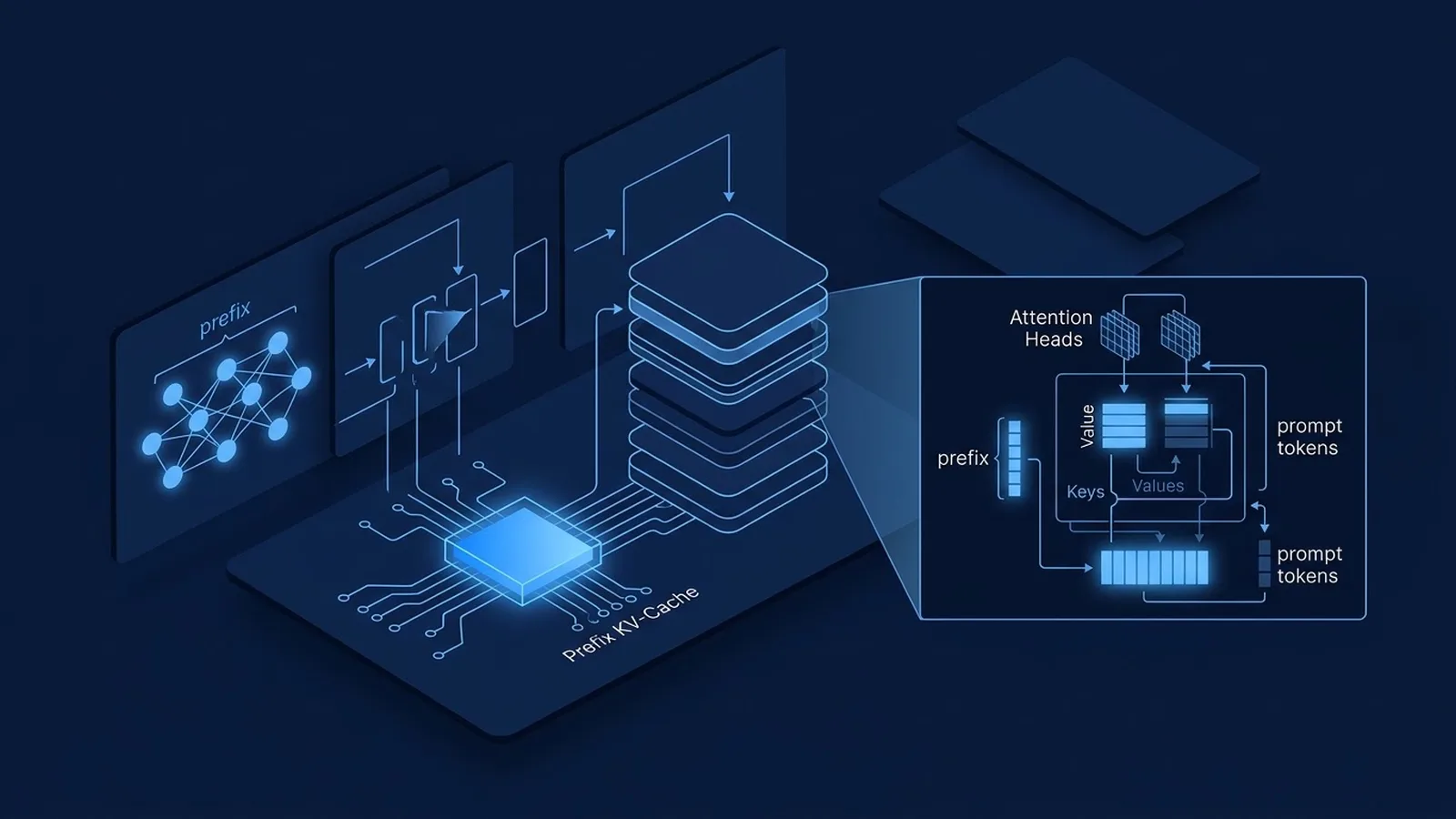
When setting up modular prompts, smart caching helps optimize both throughput and budgets; read in the article on prefix caching for prompts how static instructions remain reusable without repeated parsing costs. To understand how different token types financially affect the invoice, the dossier on pricing models per token for input, output, and cache exposes the cost structures of modern API providers.
A robust token budgeting model calculates the dynamic space in advance:
beschikbare_output_tokens = model_context_window - input_tokens - veiligheidsmargeHere, the safety margin (for example 250 to 500 tokens) serves to absorb system instructions, tool definitions, and inaccuracies in local tokenizers.
| System Component | Allocated Budget | Enforcement Mechanism |
|---|---|---|
| System Prompt & Tools | 500 - 1,500 tokens | Static compile-time validation during CI/CD |
| User Context / RAG | 2,000 - 8,000 tokens | Hard truncation/re-ranking of chunks beforehand |
| Reserved Output Space | 1,000 - 4,000 tokens | Dynamically set max_tokens parameter |
| Safety Buffer | 500 tokens | Fixed deduction to prevent context overflow |
In monitoring dashboards (such as OpenTelemetry or custom metrics collectors), the percentage of finish_reason == 'length' should be tracked as a hard quality indicator. A sudden rise in this metric points to prompt drift, users unexpectedly uploading large documents, or regressions in automated prompt templates.
Best Practices for Robust Production Pipelines
Structurally eliminating truncation problems requires a combination of defensive prompt techniques, backend validation, and an architecture designed with network and generation limits in mind. By designing systems with the awareness that every language model has a physical limit, software keeps functioning reliably under all circumstances.
In summary, resilient systems apply the following design principles:
- On every API call, immediately check the
finish_reasonfield before the response text is processed. - Configure
max_tokensexplicitly, based on a calculated token budget — never rely on the default settings of client libraries. - Decompose complex extraction and writing tasks via prompt chains or map-reduce patterns instead of forcing everything into one gigantic call.
- Combine native structured outputs with deterministic parsers (such as
json-repair) to catch small imperfections immediately. - Build in stateful continuation loops for content-driven tasks where longer prose is unavoidable.